If you are an audio programmer trying to stay relevant in the games industry, the strongest position is not simply knowing more tools. It is being able to solve specific production problems: runtime issues, profiling, tooling, optimization and the handoff between audio and engineering.
That usually requires more than implementation alone. In our studio work, we have been seeing more demand for technical sound designers and audio programmers who can move across implementation, optimization, profiling, tooling and middleware integration, and there still are not that many experienced people who are comfortable across all of those layers.
The clearer you are about what you can own and what friction your work removes, the easier it is for a studio to understand where you fit.
Know what problems you can own
A broad skillset becomes more valuable when you can describe it in practical terms. “I know C++” or “I know Wwise” tells a team which tools you have touched, but not what work you can take off their plate.
A stronger position is specific: you can diagnose runtime audio issues, profile an expensive system or build a tool that removes repetitive setup. Those are production outcomes, and they are easier for a lead or producer to map to real work.
This is also why a narrow title can be misleading. A technical sound designer who understands implementation and tooling may solve more production problems than someone with stronger programming credentials but less understanding of the audio pipeline.
Understand the full audio signal flow
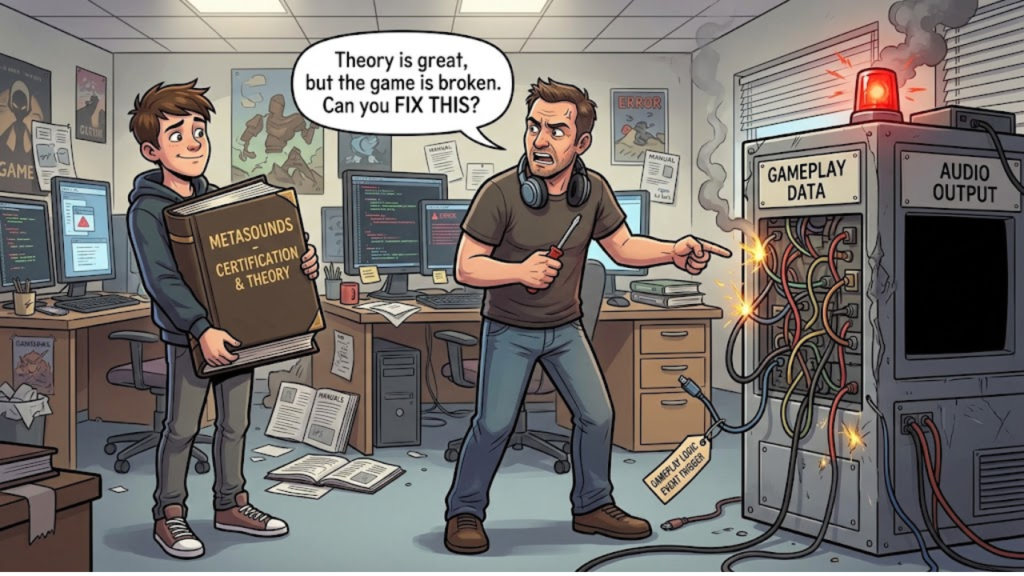
Technical audio gets easier to debug when you understand the chain from game state to what the player hears. Gameplay data reaches the audio system, runtime logic reacts, the signal passes through routing and mixing, and the final result competes with the rest of the game.
If you only understand one layer, problems take longer to isolate. A missing sound may start with gameplay logic, an incorrect parameter or a mix decision. The useful skill is knowing how to follow the problem through the system instead of assuming the failure lives inside the audio event.
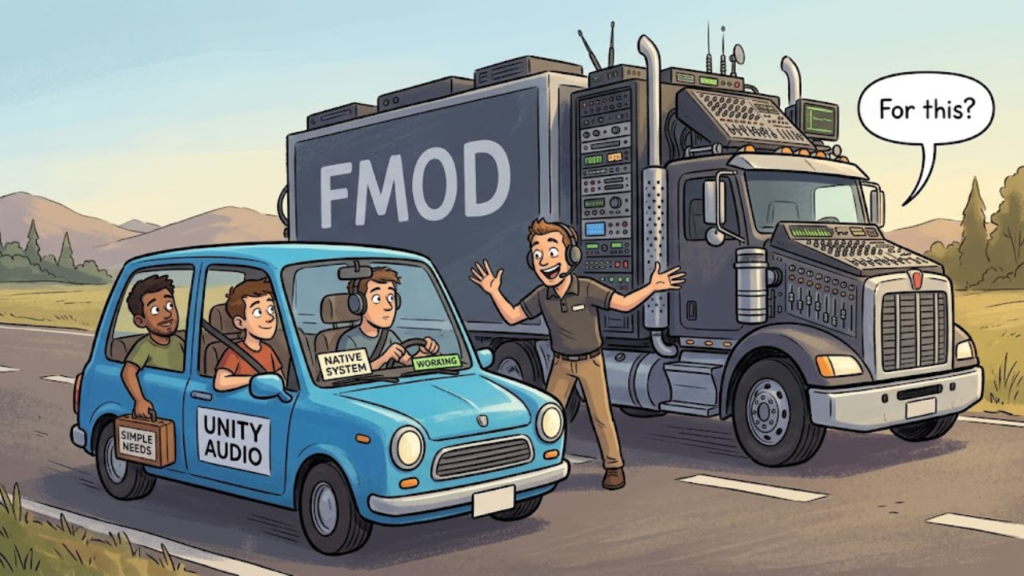
That reasoning transfers between FMOD, Wwise, Unreal, Unity and proprietary engines. The interfaces change, but the production questions around data, behavior and runtime cost remain familiar.
Treat profiling as part of design
Optimization should not be a final cleanup step. Runtime cost affects which systems are practical and how much freedom the audio team has while the game is still changing.
An audio programmer who can inspect CPU, voice count and memory behavior can help the team make decisions earlier. The point is not to optimize everything aggressively, but to know what is actually expensive before the project is already under pressure.
That also improves communication. “Audio is too expensive” is vague. Identifying the system, condition and runtime cost gives the team something concrete to solve.
Build tools that remove repeated work
Internal tools are one of the clearest ways technical audio can improve production. A useful tool might automate setup, expose runtime state or let another discipline adjust a parameter without waiting for engineering.
The value is usually simple: fewer manual steps, less waiting and fewer inconsistent setups. A small tool that removes a repeated production task can matter more than a sophisticated feature only one person understands.
Tooling also forces you to think about ownership. If sound designers can solve routine problems themselves, technical audio has changed the production structure rather than just adding code.
Bridge audio and engineering
A lot of technical audio work sits between disciplines. Audio needs gameplay data, engineering owns part of that data, and production needs to understand whether the dependency is minor or blocking.
Being able to explain that clearly is part of the technical role. The audio team should understand what is realistic, while engineering should receive a specific request instead of a vague “audio needs this.”
That bridge reduces friction and makes it easier to involve technical audio earlier. In our experience, development teams are usually very open to technical input when the problem is explained clearly and the proposed work removes a real production blocker. It also helps prevent the implementation queues described in Why Audio Becomes a Bottleneck in Game Development.
Do not specialize yourself into one tool
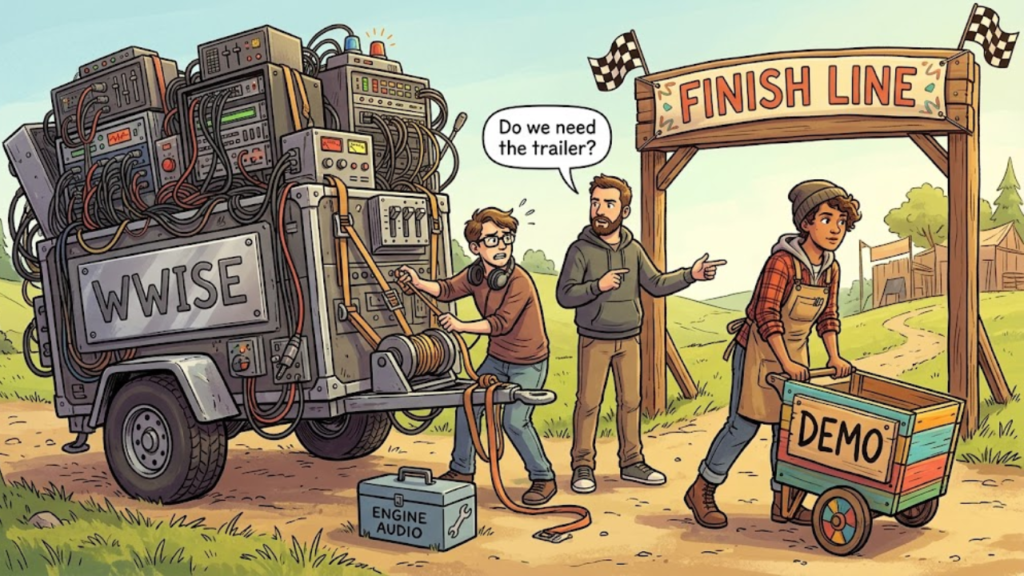
Tools matter because jobs use real production stacks, but the durable part of the skillset is the reasoning underneath them. A parameter system or profiling problem looks different in another engine, yet the core questions are similar: what drives it, who owns it, how expensive is it and how do we debug it?
That is why tech-agnostic learning remains useful even for highly technical roles. The tool may get you into the project. System thinking keeps you useful when the project changes.
Make your portfolio show production value
A technical portfolio should make it easy to understand the problem you solved. Showing code or a complex graph is not enough if the viewer cannot tell why it mattered.
Explain the constraint, the implementation and the consequence. A tool may have reduced manual setup, or a profiling pass may have made a feature viable. That context shows production judgment, not just technical complexity.
This is similar to what teams should look for when evaluating implementation ability in a sound designer for video games: the work matters because it survives inside the game.
Staying relevant means becoming easier to use
The strongest technical people are valuable because teams can give them difficult problems and get clearer systems back. That requires depth, but it also requires communication, debugging and ownership.
In a difficult market, specificity helps. Be clear about the production problems you can solve and make sure your work shows that you can solve them inside a real game pipeline.