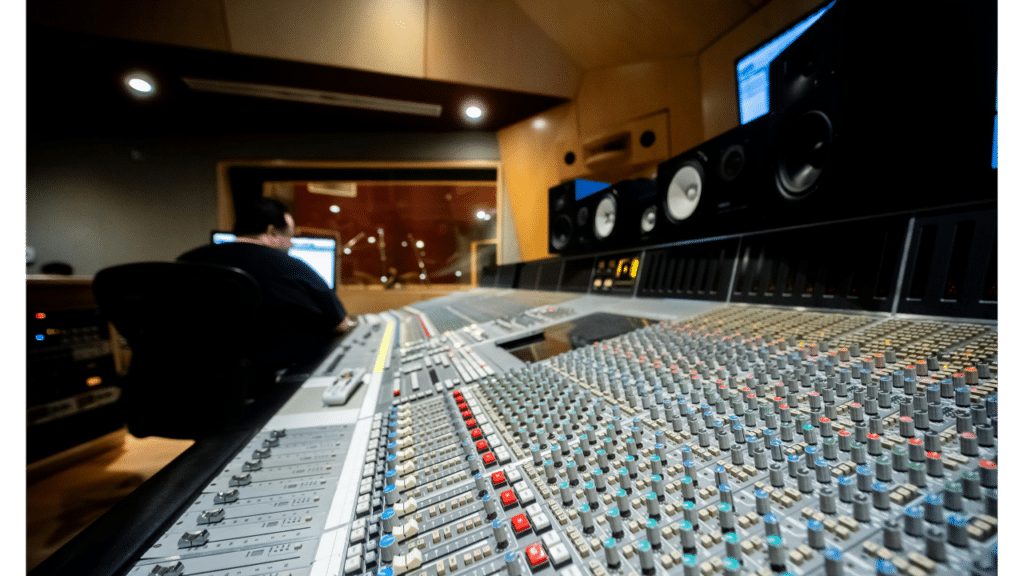
Trailer audio works when sound design, music, edit and mix all support the same pacing. The number of layers matters less than what each layer is doing.
One of the original references behind this article was a 44-second redesign that used roughly 300 tracks.
That number sounds impressive, but the more useful lesson is not “use hundreds of layers.”
It is that short cinematic work can contain a surprising amount of detail because every movement, cut and transition needs a clear relationship between sound and picture.
A dense session is only justified when those layers have a function.
Sound Design Creates Physicality
Music can carry emotion and structure.
Sound design gives the trailer weight.
Movement.
Scale.
Impact.
Environment.
A character landing, a camera move or a large object entering frame feels different when the sound gives it mass and timing.
That physicality is often what makes a cinematic feel expensive before the score even reaches its peak.
Layers Need Roles
A complex impact may combine several elements.
Transient.
Body.
Low-frequency weight.
Texture.
Motion.
Tail.
Environmental reflection.
Each layer should contribute something different.
If five tracks are all solving the same problem, the result becomes louder without becoming clearer.
Layering works when the mix can explain why every component exists.
The Edit Defines the Rhythm
Trailer sound design is closely tied to picture edit.
Cuts create timing.
Camera moves create motion.
Visual reveals create opportunities for silence or impact.
The audio team should understand the edit rhythm before filling every frame.
Sometimes the strongest decision is to delay the sound.
Sometimes the cut needs a sharp transient.
Sometimes the music should carry the transition alone.
The relationship creates pacing.
Music and SFX Should Not Compete
Trailers often become crowded because music and sound design both try to own the same moment.
If the score is already huge, another giant impact may reduce rather than increase the emotional effect.
The mix needs hierarchy.
Which element carries the transition?
Which one creates weight?
Which one should step back?
That negotiation between music and SFX is one of the central trailer-audio decisions.
Contrast Can Create More Impact Than Volume
Not every transition needs to get louder.
A sudden reduction in density can make the next sound feel larger.
Silence can expose a visual moment.
A soft detail can pull the viewer closer before the trailer expands again.
Game Audio Counterpoint explores this relationship between reinforcement and contrast in more detail.
The same principle applies strongly to trailers.
Source Choice Affects Identity
Stock libraries are useful and completely normal in trailer work.
The challenge is avoiding a result that sounds like every other cinematic edit.
Custom layers, unusual source choices and game-specific material can help the sound design feel connected to the project rather than another generic trailer template.
The strongest trailer audio reinforces the identity of the game.
It should not sound detachable.
Redesigns Are Useful Creative Exercises
Professional work is often restricted by NDA.
Redesigns give sound designers another place to show decision-making and craft publicly.
The important thing is to be transparent about what the work is.
A redesign demonstrates interpretation.
It is not evidence that the designer worked on the original production.
That distinction protects portfolio credibility.
Trailer Audio Is Different From In-Game Audio
A trailer has fixed timing.
The game does not.
That makes some techniques easier.
The sound designer can place every detail exactly against picture and build a controlled mix for one playback sequence.
In-game work needs systems, variation and runtime behavior.
Both disciplines use similar craft.
The production logic is different.
The Mix Needs to Survive Multiple Playback Systems
Trailers are heard on phones, laptops, headphones, televisions and event screens.
That requires a mix that translates.
Low-frequency impact is useful, but important information should survive without it.
Dialogue or text-driven moments need space.
The trailer should still feel intentional when played quietly through small speakers.
Translation is part of the delivery.
Pacing Is More Important Than Maximum Density
A trailer that stays at full intensity becomes flat.
The audience stops feeling escalation because there is no contrast left.
The audio should follow the dramatic curve.
Build.
Release.
Pause.
Impact.
The best trailer mixes create the feeling that the piece moved quickly because the sound guided attention cleanly through the edit.
Audio Can Make the Brand More Recognizable
A trailer is often the first contact a player has with the game.
That makes sonic identity useful.
A recurring theme, signature ability sound or recognizable UI gesture can connect the marketing asset to the actual product.
The trailer does not need to invent another audio language.
It can amplify the one the game already owns.
Game Audio Memory and Retention expands the recognition side.
Trailer Sound Design Is a Production Discipline
The final result combines spotting, source creation, editing, music coordination, mix and delivery.
A strong reel demonstrates craft.
A strong production also demonstrates timing, organization and the ability to handle multiple revisions around a fixed edit.
That is why trailer audio should be scoped as its own deliverable rather than squeezed into the final days of a campaign.
Next Step
If a trailer feels flat, mute the music and listen to the sound-design structure by itself. Then reverse the test.
The gaps will usually reveal which layer is carrying too much.
Explore Flutu’s work or send us the trailer or cinematic scope if you want to discuss sound design, music and final mix as one production.